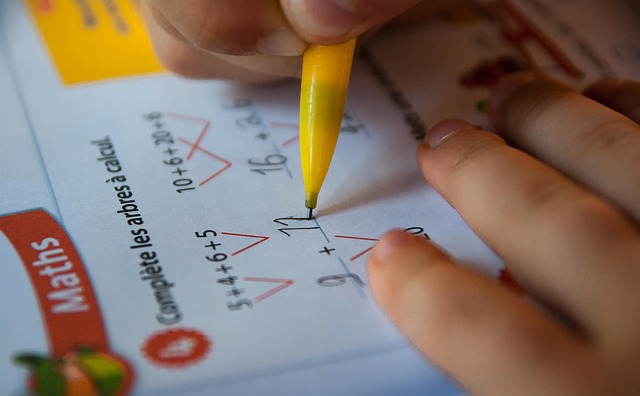





Scientists have identified key differences in how some children approach basic maths tasks, offering fresh insight into why the subject proves more challenging for certain pupils. The research, published in the Journal of Neuroscience, found that children with maths learning difficulties tend to answer questions more hastily and are less likely to adjust their behaviour after making mistakes. However, these differences were not observed when numbers were represented visually using dots rather than traditional numerical symbols.
++ Cornwall station to support NASA’s Artemis II moon mission
The findings suggest that the difficulty may lie less in understanding quantity itself and more in processing symbolic representations of numbers. According to Bert De Smedt of KU Leuven, this supports long-standing observations that symbolic number processing presents a particular challenge for some children.
In the study, researchers assessed pupils in the second and third years of primary school, comparing those with and without maths learning difficulties. Participants were shown pairs of numbers between one and nine and asked to identify the larger value within a limited time. Their response times and behavioural patterns were recorded, while brain activity was monitored using MRI scans.
Lead researcher Hyesang Chang, currently at San José State University, explained that the focus was not simply on correct answers but on how children approached the task itself.
Analysis revealed that children who answered less cautiously showed reduced activity in the middle frontal gyrus, a region associated with numerical processing, attention and impulse control. Meanwhile, those who failed to slow down after making errors exhibited lower activity in the anterior cingulate cortex, an area linked to error detection and performance monitoring.
++ Women head to Turkey for drastic leg-shortening surgery
Notably, when the same tasks were presented using dots instead of Arabic numerals, these differences in both behaviour and brain activity disappeared. This suggests that the underlying issue may be tied specifically to symbolic representation rather than an inability to grasp numerical concepts.
Experts caution that the study does not establish a direct cause-and-effect relationship between brain activity and mathematical ability. Nevertheless, the findings indicate that mathematical performance involves a network of brain regions rather than a single centre dedicated to numbers. Marie Arsalidou of York University noted that the research highlights the complexity of cognitive processes involved in maths, particularly those linked to attention and error recognition.
The study also points towards potential educational strategies. Researchers suggest that helping children reflect on how they solve problems, alongside teaching alternative approaches, could prove beneficial in supporting those with maths learning difficulties.


