

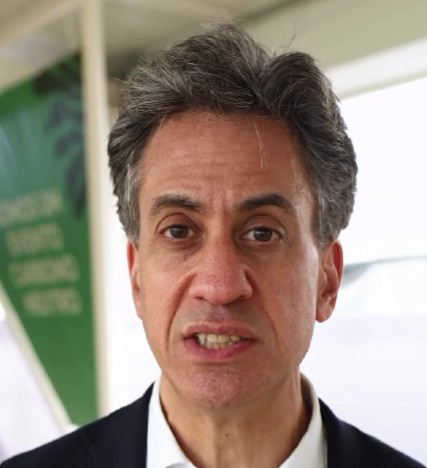
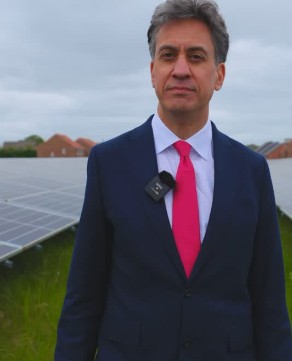


Ed Miliband is facing mounting criticism over proposals that would exclude emissions from foreign power generation in the UK’s official carbon totals, raising questions about the transparency of the Government’s net zero strategy. The Energy Secretary has committed to delivering a power grid that is 95 per cent free of gas by 2030. However, roughly 15 per cent of Britain’s electricity is imported from neighbouring countries including Belgium, Netherlands and France — all of which still rely in part on coal- and gas-fired power stations.
++ Mystery illness in orbit leaves NASA doctors searching for answers
Under the proposed approach, electricity imported via interconnectors would be classified as zero-carbon, on the basis that the associated emissions occur خارج UK territory. Critics argue this effectively allows overseas fossil fuel use to be excluded from Britain’s carbon footprint, making progress towards the 2030 target appear more advanced than it may be in reality.
Kathryn Porter, an energy analyst at Watt-Logic, described the policy as misleading. She argued that electricity generated abroad using fossil fuels cannot credibly be considered carbon-free simply because it crosses borders. “You cannot rely on accounting mechanisms to obscure the fact that emissions are still being produced,” she said.
The issue is particularly acute during periods of low renewable output, when Britain becomes more dependent on imports. At such times, overseas electricity can account for more than 20 per cent of supply, potentially increasing overall emissions when viewed on a consumption basis.
Recent figures from the National Energy System Operator suggested gas-fired generation had fallen to just 2.3 per cent of domestic electricity production. However, the data did not fully reflect the extent of imported power, which can exceed 12 per cent — some of it generated from fossil fuels abroad.
++ Rare footage captures sperm whale birth and remarkable pod cooperation
The contribution of Drax, a biomass power station fuelled by imported wood pellets, was also not highlighted in those figures. The plant typically provides between 4 and 5 per cent of the UK’s electricity, but remains controversial over its environmental credentials.
Experts have called for greater clarity in how emissions are reported. Michael Grubb, professor of energy and climate change at University College London, said the Government should adopt a dual accounting system. This would distinguish between territorial emissions and those linked to imported energy, offering a more complete picture of the UK’s carbon impact. He added that calculating emissions tied to imported electricity is inherently complex, but argued that clearer communication is essential to maintain public trust in climate targets.
Meanwhile, Claire Coutinho, the shadow energy secretary, criticised the current framework, claiming it risks shifting emissions — along with jobs and economic activity — overseas. She described the approach as flawed, warning it could undermine both energy security and domestic industry. The Department for Energy Security and Net Zero has been approached for comment.


